



 Veterinary care
 Ways to get care
 Visit information
 Pet wellness plans
 Virtual petcare
 Pet Chat™ information
 Locations
 MyBanfield
 Shop packages now
 Request information
 Package FAQs
 NEW! Banfield Access Plan
 Pet health articles
 Puppy care
 Kitten care
 Senior care
 Dental care
 Diet and nutrition
 Ear care
 Parasites
 Fleas
Fleas Ticks
Ticks Mites and mange
 Worms
Worms Skin and coat care
 Mobility
 First aid
 Vaccinations
 End of life care
 Podcast - Not Just Fluff
 Traveling with your pet
 Video vault
 About us
 Contact us
 Newsroom
 Our leadership
 Shop
Shop
 Locations/appointments

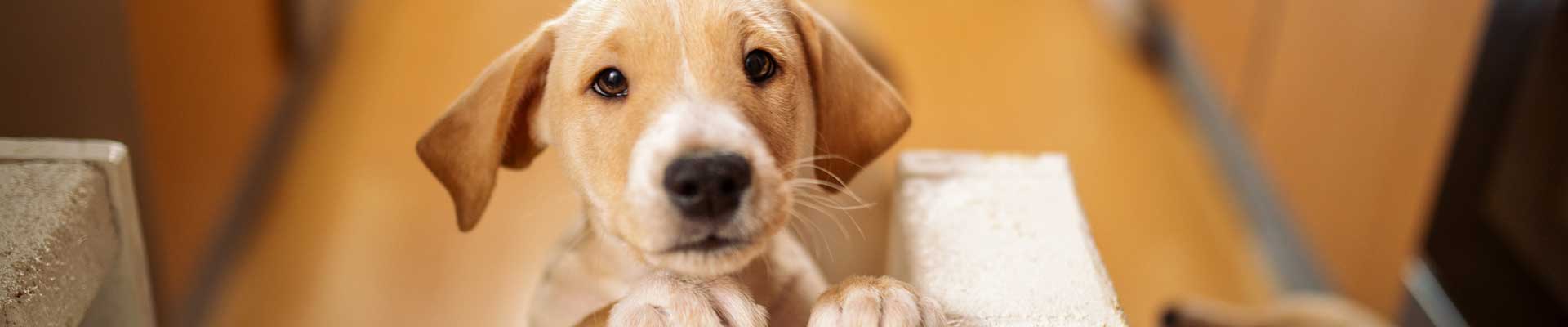


puppy separation anxiety: how to help your puppy feel safe when you leave
If your puppy cries, whines, or chews things when you leave the house, you’re not alone. Separation anxiety is one of the most common challenges new pet owners face, and it doesn’t mean you’ve done anything wrong. Your puppy isn’t being bad — they’re showing signs of distress. With time, patience, and the right approach, you can teach your puppy how to be confident on their own. Phew!
The 3 most important things to know:
- Your puppy isn’t being naughty — they’re just showing a stress response.
- Punishment makes it worse, but calm routines make it better.
- You can teach your puppy to feel safe alone with the right training.
If your puppy’s anxiety seems extreme or is getting worse, talk to your Banfield veterinary team for guidance and ruling out a possible medical cause. Puppies can be a handful, and Optimum Wellness Plans® include unlimited office visits for your peace of mind. Explore puppy plans

What is puppy separation anxiety?
Puppy separation anxiety is a form of distress that happens when a dog is away from their favorite person, usually their primary caregiver. It’s not just them being clingy. Puppies with separation anxiety may truly believe something bad is happening when they’re alone.
This emotional response can trigger physical symptoms like pacing, drooling, or barking. These behaviors often indicate the pet is experiencing stress when left alone and has not yet learned to feel calm during separation.
Some puppies experience isolation distress, which means they struggle anytime they’re alone, even if it’s not specifically about one person. Whether it’s separation or isolation, the overarching idea is the same: fear of being alone.
Signs your puppy may have separation anxiety
Every puppy is different, but common signs include:
- Barking, whining, or howling after you leave
- Potty accidents despite being house-trained
- Chewing or scratching doors, windows, or furniture
- Pacing, trembling, or drooling
- Trying to escape confinement areas
- Clinginess when you’re home or following you from room to room
You might also notice pre-departure stress, which can look like your puppy panting, pacing, or whining when you pick up your keys or put on your shoes. Those cues tell them you’re about to go, and their anxiety starts before you even leave.
These behaviors can feel overwhelming, but they’re not a reflection of your puppy’s character or your care. They’re signs your pup needs more guidance and reassurance.
Why do puppies struggle to be alone?
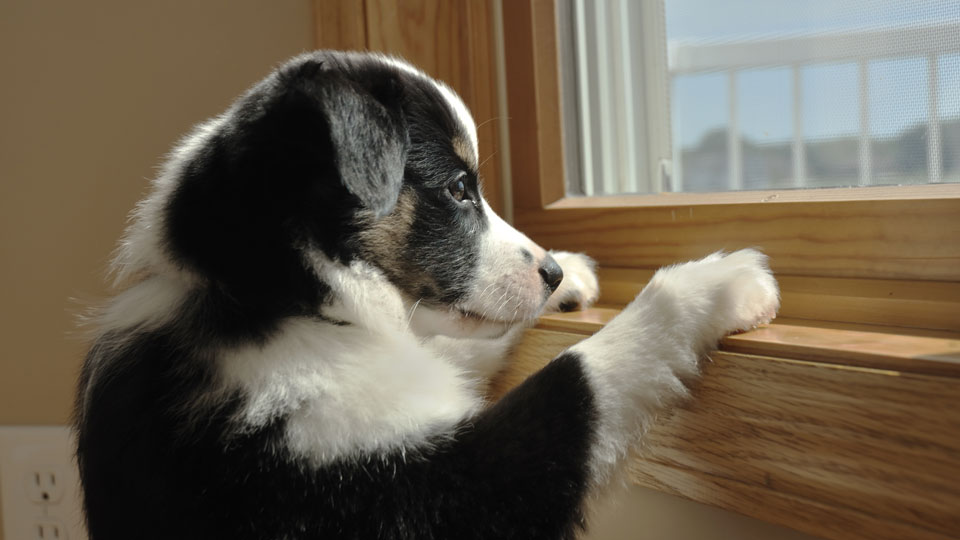
Puppies are social by nature. In early puppyhood, they sleep, eat, and play surrounded by littermates and their mother. When they suddenly find themselves in a quiet home, their instincts kick in: being alone seems unsafe.
Changes in environment, routine, or bonding time can make that fear stronger. Some puppies also have genetic or temperament-based sensitivity to stress. But remember: it’s not your fault, and it doesn’t mean your puppy won’t learn. With gentle training and consistency, most puppies outgrow separation anxiety as they gain confidence.
Creating a safe and predictable environment
The foundation of easing separation anxiety starts at home. A predictable routine helps your puppy know what to expect each day, like when they’ll eat, play, nap, and see you again. That predictability builds trust and reduces uncertainty.
Create a “comfort zone”
Designate a cozy space just for your puppy. That can be a crate, playpen, or small puppy-proofed room. Add soft bedding, safe toys, and an item that smells like you. This spot should always feel positive and secure, never used for punishment.
Crates can be a big help, but only if introduced gently. The goal is for your puppy to see the crate as their safe den, not a place they get locked away. Learn more about crate training
Add enrichment and calm support
Give your puppy something fun to focus on when you’re gone, like a treat-filled toy, puzzle toy, or lick mat. These encourage self-soothing and mental stimulation. Pet cameras can also be helpful for checking in (and for peace of mind).
If your puppy still seems anxious, talk to your vet about calming aids to support your training plan and help your puppy relax.
Training techniques to build your puppy’s confidence
Your best tools for soothing separation anxiety? Patience and repetition. The goal is to help your puppy associate alone time with calm, positive experiences.
Start small
Practice desensitization by showing your puppy cues like grabbing your keys or jacket but don’t actually leave. Do this multiple times a day until your puppy stops reacting to those triggers.
Pair departures with good things
Counter-conditioning may create positive associations. For example, you could give your puppy a special treat or toy that only appears when you leave and disappears when you return. Over time, your puppy learns to associate your departure with positive rewards.
Encourage independence
Build your puppy’s confidence gradually. Let them nap in a different room with a chew toy, or encourage solo play with engaging puzzles. Praise calm, quiet behavior when they’re on their own.
Avoid leaving for long stretches too soon. Sudden, lengthy absences can flood your puppy with fear and set back progress. Short, successful sessions build lasting confidence.
What to avoid when your puppy has anxiety
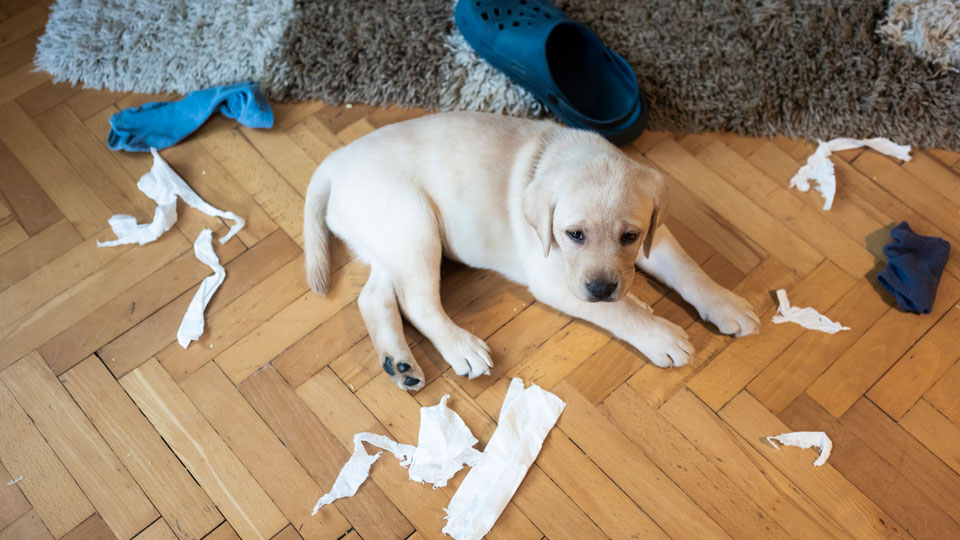
When your puppy cries, chews through something you love, or has an accident right after you leave the room, it’s natural to feel frustrated or even heartbroken. You might wonder if you’ve done something wrong or if your puppy is acting out on purpose. But take a deep breath: they’re not misbehaving, they’re struggling. Anxiety in puppies isn’t defiance — it’s fear.
When your puppy panics, their body floods with stress hormones. Barking, scratching, or shredding a pillow are simply their ways of trying to cope with being alone. Responding with punishment or anger can make that fear worse, teaching them that being alone can be both scary and unsafe.
Tip: It’s a good idea to always keep your valuables and potential hazardous items out of reach when they’re home alone.
Here’s what to avoid, and what to do instead:
- Scolding or punishment may increase anxiety in some pets. Even a firm “no” can frighten an anxious puppy. Instead, stay calm and focus on preventing future triggers or giving them a safe outlet, like an appropriate chew toy.
- Making a big scene when you leave or come home may encourage bigger reactions. It’s hard not to shower them with affection after being apart, but quiet comings and goings help your puppy learn that departures aren’t a big deal.
- Leaving your puppy for too long too soon can set back progress. Think of confidence-building as a slow, steady climb.
Remember: your puppy isn’t trying to upset you. They’re asking for reassurance in the only way they know how. Staying patient, consistent, and gentle will teach them that being alone isn’t something to fear but something they can handle.
When do you need to call the vet?
Some puppies need a little extra support to get through separation anxiety, and that’s completely okay. It doesn’t mean you’ve done anything wrong or that your puppy can’t learn to be comfortable alone. Sometimes their anxiety runs deeper and needs a helping hand from your veterinary team.
Reach out to your vet if you notice:
- Self-injury from chewing, digging, or escape attempts
- Refusing food or water when alone
- Vomiting, diarrhea, or sudden regression in training
- Anxiety that persists or worsens despite consistent training
Your vet may recommend additional steps like nutritional supplements, calming medications, or a referral to a veterinary behaviorist or Certified Separation Anxiety Trainer (CSAT). With the right plan, most puppies show improvement in a matter of weeks.
Not sure if it’s anxiety or something else? We’re here to help.
Find a Banfield location near you
Important Notice: The information provided on this page is for informational purposes only and is not a substitute for professional veterinary advice. Always consult a veterinarian with any questions regarding your pet's health or medical condition. Never disregard or delay seeking professional veterinary advice based on information from this page.
FAQs about puppy separation anxiety
Is my puppy destroying things out of spite?
No. Destruction is usually a symptom of panic, not misbehavior. Your puppy isn’t trying to punish you. They’re struggling to cope with being alone.
Should I punish my puppy for having an accident when I’m gone?
Never. Punishment increases anxiety and confusion. Focus instead on prevention, short absences, and rewarding calm behavior.
What can pre-departure anxiety in a puppy look like?
Panting, pacing, drooling, or whining when you grab your coat, shoes, or keys are all signs your puppy knows you’re leaving and that they’re already anxious.
Can a puppy hurt themselves from separation anxiety?
Unfortunately, yes. Some puppies chew or dig so frantically that they injure themselves. If that happens, contact your vet right away.
Should my puppy spend time alone even when I’m home?
Yes. Encouraging quiet, independent play while you’re nearby helps teach your puppy that it’s okay to be alone.
How should I greet my puppy when I return?
Keep greetings calm and low-key. Wait until your puppy settles before giving attention. That helps teach that your return isn’t a big, emotional event.
Does a predictable daily routine actually reduce puppy anxiety?
Absolutely. Routine builds confidence because your puppy learns what to expect and when, and that you always come back.
What if the crate seems to make my puppy’s anxiety worse?
If your puppy panics in the crate, don’t force it. Try a larger playpen or safe room instead. Crate training should be gradual and positive.
Does leaving the radio or TV on help?
For some puppies, gentle background noise can help mask outside sounds and make them feel less alone.
Is doggy daycare a good solution for separation anxiety?
Sometimes. If your puppy enjoys social play and handles new environments well. For others, it can be overstimulating. Ask your vet if it’s right for your pup.
When is it time to consider medication for separation anxiety?
If your puppy’s anxiety is severe or not improving with training, your vet may recommend medication as part of a broader treatment plan. It’s not a quick fix but can help your puppy stay calm enough to learn new coping skills.
Are you ready to help your puppy feel secure?
You’re already taking the right steps by learning and seeking support. With consistency, patience, and lots of positive reinforcement, your puppy can learn that they’re okay being alone.
Get ongoing support during puppyhood and beyond with an Optimum Wellness Plan. Every plan includes unlimited office visits and 24/7 Pet Chat™ for real-time advice and peace of mind from veterinary professionals (available in most states). Explore preventive care packages


Early Care
Designed for growing puppies.
Help protect your puppy from harmful diseases and support their health as they grow.
See what's included
Early Care Plus
Designed for growing puppies – includes a spay or neuter surgery.
All the services in Early Care, plus an additional discount and a spay or neuter procedure.
See what's included

doggie dilemma? cat conundrum?!


 Pet Chat™


 Appointment details


 Pittsburgh Village East
 847-816-4667


 Notes for the vet

 This is a note for users pertaining to specific appointment types, requests, requirements, or other items.