


 Veterinary care
 Ways to get care
 Visit information
 Pet wellness plans
 Virtual petcare
 Pet Chat™ information
 Locations
 MyBanfield
 Shop packages now
 Request information
 Package FAQs
 NEW! Banfield Access Plan
 Pet health articles
 Puppy care
 Kitten care
 Senior care
 Dental care
 Diet and nutrition
 Ear care
 Parasites
 Fleas
Fleas Ticks
Ticks Mites and mange
 Worms
Worms Skin and coat care
 Mobility
 First aid
 Vaccinations
 End of life care
 Podcast - Not Just Fluff
 Traveling with your pet
 Video vault
 About us
 Contact us
 Newsroom
 Our leadership
 Shop
Shop
 Locations/appointments

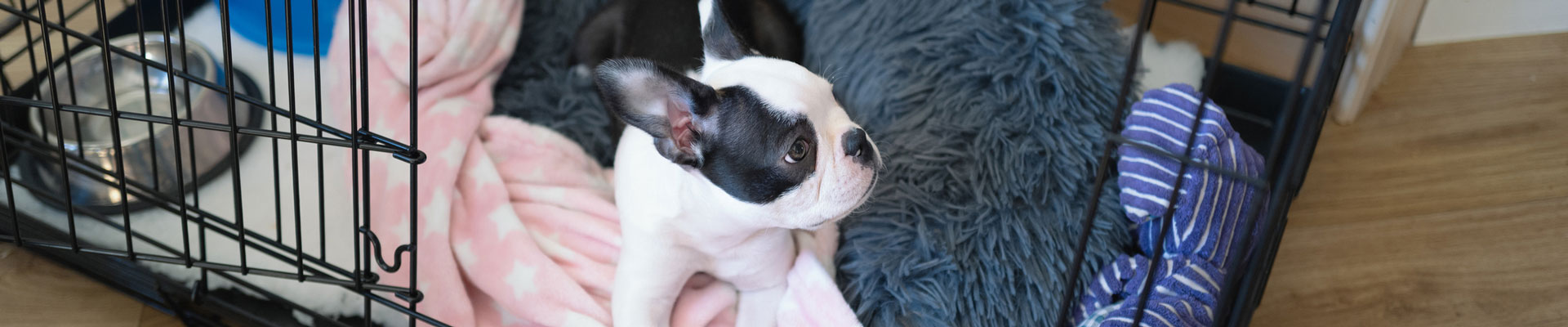


how crate training can be a great training tool
Crate training can feel intimidating at first, especially with a curious, vocal puppy who just wants to be near you. But when introduced gently, a crate becomes more than just a training tool. It becomes a safe, cozy space where your pup can relax, nap, and learn independence with confidence.
Think of a crate as your puppy’s den: a familiar retreat that provides a sense of calm and security. Crate training not only helps with potty training and household safety, but it also teaches your furry pal to settle, self-soothe, and build routines that make life together easier.
If you’re feeling unsure about how to start, you’re not alone. Many new puppy owners worry about doing crate training “wrong.” However, with patience and consistency, your puppy can learn to love their crate.
If your pup appears to struggle with fear or anxiety, your local Banfield veterinary team can help. Get peace of mind with Optimum Wellness Plans®, which include two yearly comprehensive exams, unlimited office visits, and Pet Chat™ (available in most states).

Why crate training helps puppies (and their owners)
Crate training works because it taps into a puppy’s natural instincts and need for structure. A well-used crate is less about confinement and more about comfort and safety. Here’s how it helps:
- It gives your puppy a safe space. Every puppy needs a quiet place to rest and decompress after play, noise, or visitors. A crate offers that familiar “den” feeling where they can relax undisturbed.
- It makes potty training easier. Puppies don’t like to soil where they sleep, so a properly sized crate helps teach bladder control and bathroom habits faster.
- It prevents mischief and accidents. When you can’t supervise, the crate keeps your puppy safe from chewing cords, getting into trash, or other household hazards.
- It builds confidence for future experiences. A puppy who’s comfortable spending calm time in a crate will more likely handle car rides, vet visits, and boarding with much less stress.
With the right approach, the crate can become a positive, predictable part of your pup’s routine, and not something to fear.
Step-by-step: how to crate train a puppy
The key to crate training success is slow, steady progress. Each small step can help your puppy associate the crate with safety, comfort, and other good things — not separation or punishment.
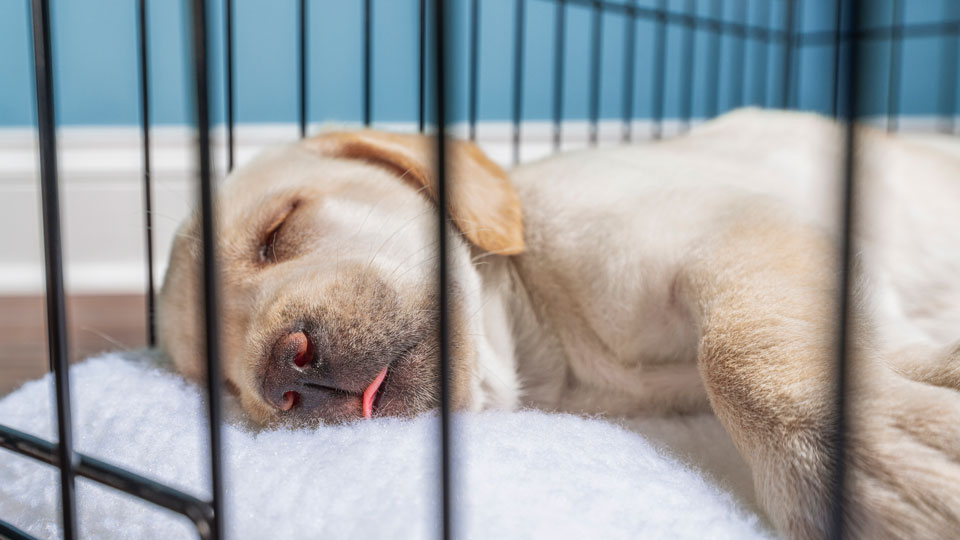
Pick the right crate size
Your furry friend’s crate should be just big enough for them to stand up, turn around, and lie down comfortably. Too much space can lead to accidents since puppies may choose one corner to sleep and another to potty.
If your puppy is still growing, you can use a crate divider so you can adjust the space as they mature, keeping it cozy but not cramped.
Make the crate a happy place
Before you ever close the door, let your pup explore the crate freely. Keep the door open and sprinkle in treats, toys, or a soft blanket to make it inviting. The goal is curiosity, not pressure.
Your puppy should want to step inside the crate on their own. Celebrate small wins like sniffing, pawing at the door, or resting nearby. It’s okay if your puppy doesn’t love the crate instantly. Think of this as relationship-building, and each positive interaction builds trust.
Feed meals in the crate
Food is one of the most powerful ways to create positive feelings. Begin by placing your puppy’s bowl just inside the crate with the door open. After a few meals, move the bowl farther in, then try closing the door while they eat.
Once the meal is done, open the door calmly and let them out. This slow introduction can teach your puppy that good things — food, safety, comfort — all happen inside their crate.
Covering the crate: yes or no?
Some puppies relax better with a light cover over part of the crate, creating a darker, den-like space. Others may prefer to see their surroundings.
Try draping a breathable blanket over the top and sides, leaving one side open, and watch how your puppy reacts. If they seem more anxious or start panting, remove the cover and keep things light and airy.
Build up crate time slowly
One of the biggest mistakes a new owner can make is closing the crate door too soon or leaving the puppy alone too long. Start with just a few minutes at a time while you’re nearby reading, cooking, or watching TV. Gradually increase the time in small steps:
- 5 minutes with you nearby
- 15 minutes while you step out of the room
- 30 minutes while you go for a short errand
Each successful session is a big win. Avoid jumping straight to hours of alone time. That can create anxiety and setbacks.
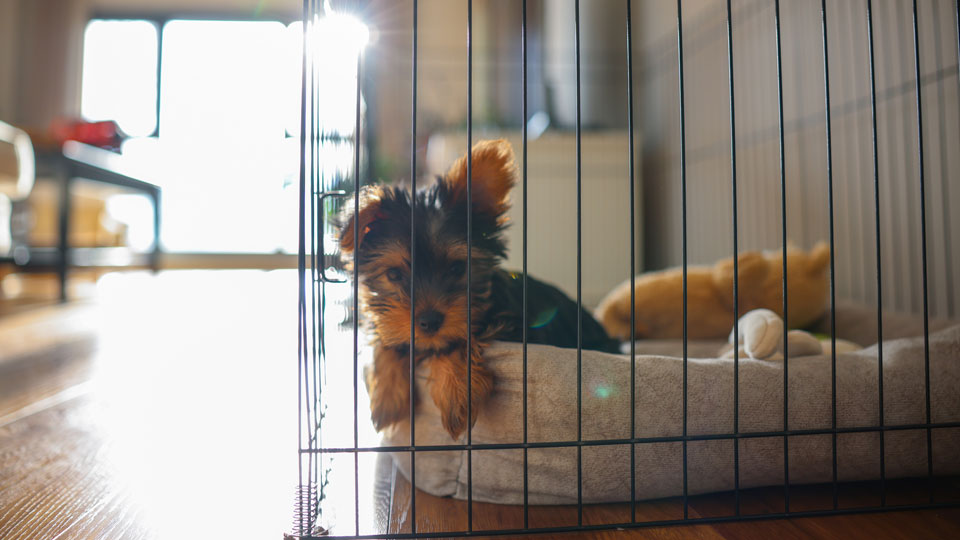
Where should the crate go?
For the first few weeks, keep the crate in your bedroom or close by at night. Hearing you breathe or move can be deeply comforting to a new puppy who’s adjusting to life away from their littermates.
As your puppy grows more independent, you can gradually move the crate to a quiet corner of the house. The goal is a spot that feels calm, not isolated.
How long can a puppy be in a crate?
Adult dogs can typically stay crated for up to 6–8 hours, but puppies need frequent breaks for bathroom trips, meals, play, and social time.
A helpful rule of thumb: Your puppy can stay in the crate for about one hour per month of age, up to a comfortable limit. This is what that looks like:
- 8 weeks: 2 hours
- 12 weeks: 3 hours
- 16 weeks: 4 hours
A crate is a safe spot for rest, and not a place for long isolation. The more balanced your puppy’s day feels, the faster they might settle in happily when it’s time to rest.
Important Notice: The information provided on this page is for informational purposes only and is not a substitute for professional veterinary advice. Always consult a veterinarian with any questions regarding your pet's health or medical condition. Never disregard or delay seeking professional veterinary advice based on information from this page.
Crate training FAQs
When is it okay to ignore a puppy whining in the crate?
If you know your puppy has gone potty, isn’t hungry, and has had enough playtime, gentle whining can sometimes be ignored for a minute or two. Wait for a pause before letting them out. This teaches that calm behavior opens the door, not noise.
How can I tell if my puppy has separation anxiety vs. just doesn’t like the crate?
Mild resistance is normal at first. But nonstop panic (drooling, shaking, biting at the crate) may signal separation anxiety. (Learn more about puppy separation anxiety.) Talk to your vet if these signs persist.
Should I wait for my puppy to be quiet before letting them out?
Yes. Opening the crate during whining can reinforce the idea that crying equals freedom. Wait for a brief calm moment, then open the door and reward that calm behavior.
What is the rule for how long a puppy can hold its bladder by age?
Generally, a puppy can hold it for about one hour per month of age plus one — up to about six hours for adults. (3 months = 4 hours) Nighttime can be a bit longer, but young puppies still need at least one middle-of-the-night potty break.
Should the puppy crate be in my bedroom at night?
Yes, at least at first. It helps your puppy feel safe and connected, and you’ll be able to hear if they need a potty break.
Is it okay to use a crate for punishment or time-outs?
No. The crate should always feel safe and positive. If you use it for punishment, your puppy will associate it with fear instead of comfort.
What happens if a puppy’s crate is too big?
Too much space can encourage accidents or pacing. Use a divider or smaller crate until your puppy reaches adult size.
When crate training isn’t working
If your puppy cries, resists, or refuses to enter the crate, just know that this is common and treatable.
Sometimes crate struggles are about the pace of training and their emotions, not training technique. Your puppy may simply need more time, reassurance, or positive experiences to be comfortable.
Signs your pup might need extra help:
- Panting, drooling, or trembling when near the crate
- Persistent barking, whining, or chewing the bars
- Accidents or attempts to escape
- Refusal to eat meals in or near the crate
If these behaviors don’t improve after a week or two of gentle practice, talk to your veterinarian. They can help rule out separation anxiety or medical causes and may recommend a certified dog trainer for support.
Remember that crate training should never feel like a battle! Your puppy is learning to trust that they’re safe even when you’re not in sight. That takes time, patience, and consistency.
Ready to help your puppy feel safe?
Crate training should feel calm and supportive but not overwhelming. If your puppy is struggling to adjust, your Banfield veterinary team can help you find the right approach.
Banfield’s Optimum Wellness Plans® for puppies are designed to make every stage easier, giving you peace of mind with unlimited office visits, preventive care, and expert guidance whenever you need it. From first vaccines to behavior advice, you’ll have a partner for every milestone and every “is this normal?” moment. Explore puppy preventive care packages


Early Care
Designed for growing puppies.
Help protect your puppy from harmful diseases and support their health as they grow.
See what's included
Early Care Plus
Designed for growing puppies – includes a spay or neuter surgery.
All the services in Early Care, plus an additional discount and a spay or neuter procedure.
See what's included


doggie dilemma? cat conundrum?!



 Pet Chat™


 Appointment details


 Pittsburgh Village East
 847-816-4667


 Notes for the vet

 This is a note for users pertaining to specific appointment types, requests, requirements, or other items.