



 Veterinary care
 Ways to get care
 Visit information
 Pet wellness plans
 Virtual petcare
 Pet Chat™ information
 Locations
 MyBanfield
 Shop packages now
 Request information
 Package FAQs
 NEW! Banfield Access Plan
 Pet health articles
 Puppy care
 Kitten care
 Senior care
 Dental care
 Diet and nutrition
 Ear care
 Parasites
 Fleas
Fleas Ticks
Ticks Mites and mange
 Worms
Worms Skin and coat care
 Mobility
 First aid
 Vaccinations
 End of life care
 Podcast - Not Just Fluff
 Traveling with your pet
 Video vault
 About us
 Contact us
 Newsroom
 Our leadership
 Shop
Shop
 Locations/appointments

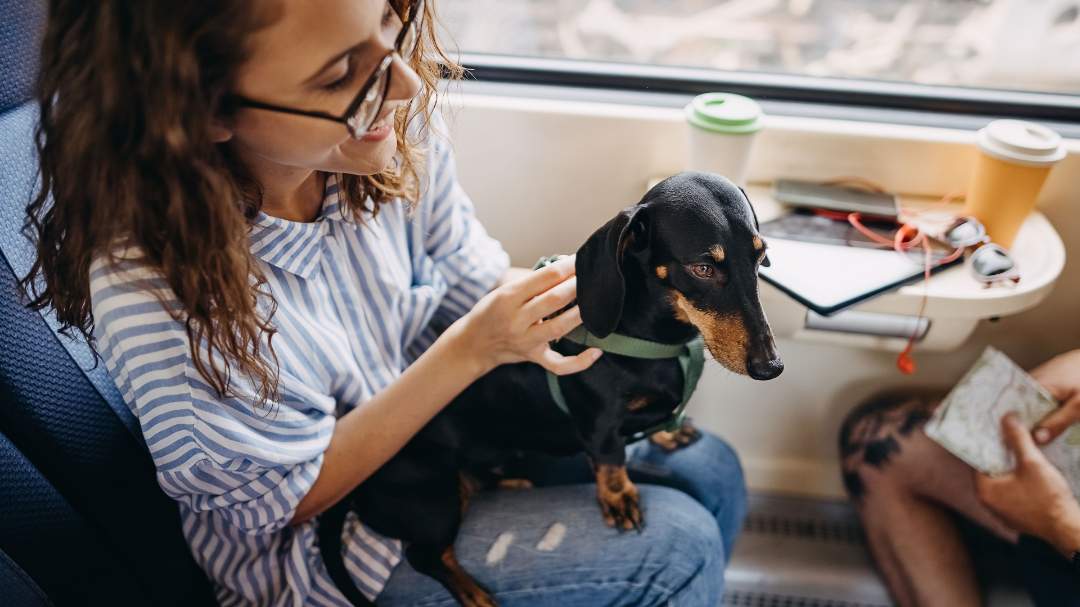


holiday travel with your pet: what to know before you go
It can be stressful knowing exactly the best way to travel with your pet during the holidays or any time of year.
If traveling with your pet is new to you, we’ve got some helpful tips to make the experience as pain-free and full of joy as possible.
Road trips with your dog or cat
Many pet owners enjoy driving with their pet because it allows for potty breaks, fewer interactions with strangers, and taking your sweet time. However, road trips come with their own set of rules. It’s important that you prepare appropriately so both you and your pet are safe and happy.
Can my dog or cat sit in the front seat during a road trip?
We do not recommend that your dog or cat sit in the front seat with you for their safety. Why? Because air bags deploy within milliseconds and are incredibly forceful, up to 200 miles per hour, which could kill your pet.
What’s the safest way for a pet to ride in a car?
We recommend that your pet be buckled in the back seat in a carrier or harness. Your pet is precious cargo, just like any other being in the vehicle. So having them confined and restrained keeps everyone safe — an excited pup jumping into the driver’s seat isn’t good for anyone. Also, we don’t recommend letting your pup stick their head out the window. We know a lot of dogs love it, but there can be external risks that make it unsafe.
Flying with your dog or cat
If you choose to fly with your pet, you need specific forms to do so. Your first stop should be the USDA APHIS Pet Travel website for current and accurate travel requirements.
You should also discuss with your veterinarian how your pet might do on the plane. Your vet can prescribe medications that help ease stress, but in reality, some pets just aren’t well suited for flying.
What is the biggest dog you can bring on a plane?
Most domestic and international airlines require that your pet fits in a small carrier that can be placed under the seat, typically around 18” X 11” X 11”. That means a 15-pound dog or cat is more likely to qualify for cabin travel over a 70-pound dog. If your pet cannot fit in a small carrier, it will have to go in a larger approved crate in cargo. Some private and semiprivate airlines allow for larger dogs in the cabin.
Note: It’s the pet owner’s responsibility to gather travel requirements to discuss with your veterinarian. If you are traveling internationally, Banfield recommends working with a pet travel agent to ensure you have everything you need for the trip. The authoritative source for all travel requirements is the USDA APHIS Pet Travel website.
This information is only for general use. All current and accurate travel restrictions and requirements should be obtained through your airline officials.
Is flying painful for pets?
Flying is not typically painful, though it can be stressful, scary, and uncomfortable for some animals. From cabin pressure changes to loud noises, temperature changes to confinement, traveling can be a lot. Talk to your vet about ways to minimize anxiety for your pet. Options include medications such as trazodone or gabapentin, calming clothing that swaddles your pet, or a pheromone collar or spray.
Train travel with your dog or cat
Certain domestic pets are allowed on America’s passenger rail carriers for a certain amount of time. Head over to your rail carrier’s website to check their latest rules for traveling with pets.
Bus travel with your dog or cat
At this time, the largest intercity bus service, Greyhound, only allows service animals on their buses. Visit their Customers with Disabilities page to learn more. As for smaller bus systems in your area, it all depends. Some transit systems allow pets and some don’t. It’s important to check your local transit system’s website or give them a call to get the scoop.
What to take on a trip with your dog or cat
Make sure you have your pet’s tags, vaccination paperwork, food and water with their respective bowls (this is a little tricky when flying — bring a small amount of dry food and treats), medication, leash/harness, poop bags or pee pads, carrier, and toys or their favorite blanket. If you’re crossing any state or national borders you’ll want to have the correct health certificate and other required paperwork.
Does my pet need a health certificate, vaccines, or wellness exam for travel?
In most cases, some or all of these forms may be required. Travel requirements can vary, so be sure to check USDA APHIS and your destination for the most current requirements. If you need your pet’s proof of vaccinations, health certificates, or any other forms to travel, we can help!
Getting this paperwork started well in advance can help alleviate some of the last-minute stress that inevitably occurs with travel. So book an appointment with your local Banfield team as soon as possible.
Keeping your pet comfortable while traveling
No matter how you are traveling, doing it with a pet takes preparation to make sure your furry travel companion is comfortable in their carrier or in the car.
Here are some ways to get your pet accustomed to traveling:
- Leave the carrier open somewhere in your house for your pet to get used to
- Feed your pet in the carrier to create a positive association
- Have your pet spend a few minutes in the closed carrier daily to help them get used to being in it
- Use a noise machine to get your pet used to different sounds
- If you are taking a long car trip, make sure your pet is comfortable with shorter trips first
Happy traveling!






 Pet Chat™


 Appointment details


 Pittsburgh Village East
 847-816-4667


 Notes for the vet

 This is a note for users pertaining to specific appointment types, requests, requirements, or other items.