


 Veterinary care
 Ways to get care
 Visit information
 Pet wellness plans
 Virtual petcare
 Pet Chat™ information
 Locations
 MyBanfield
 Shop packages now
 Request information
 Package FAQs
 NEW! Banfield Access Plan
 Pet health articles
 Puppy care
 Kitten care
 Senior care
 Dental care
 Diet and nutrition
 Ear care
 Parasites
 Fleas
Fleas Ticks
Ticks Mites and mange
 Worms
Worms Skin and coat care
 Mobility
 First aid
 Vaccinations
 End of life care
 Podcast - Not Just Fluff
 Traveling with your pet
 Video vault
 About us
 Contact us
 Newsroom
 Our leadership
 Shop
Shop
 Locations/appointments

feline leukemia (FeLV) vaccine: what it protects against and who needs it
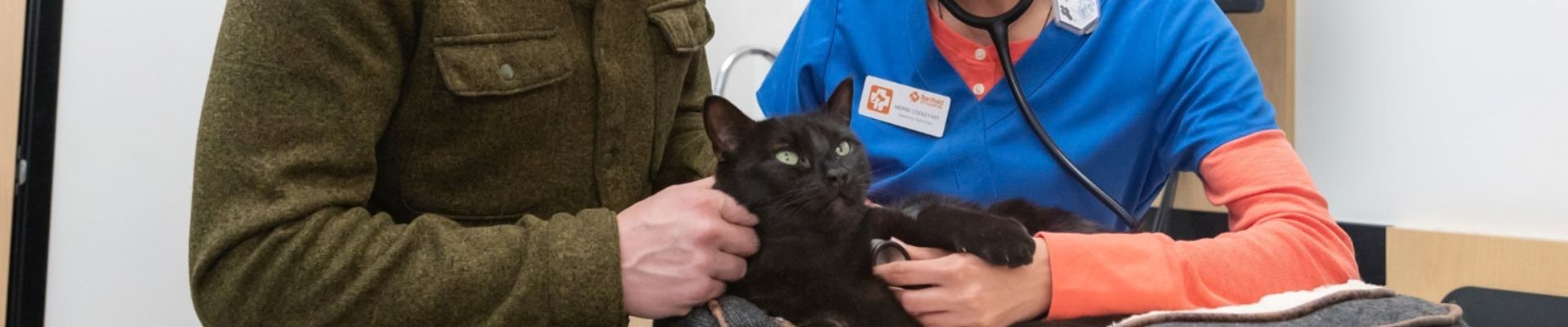
The feline leukemia (FeLV) vaccine helps protect cats against feline leukemia virus (FeLV), a contagious virus that weakens the immune system and can lead to certain cancers. The vaccine is recommended for all kittens and cats younger than one year, as well as for adult cats based on their lifestyle and risk of exposure. Before your cat receives their first FeLV vaccine, your veterinarian will typically recommend testing for FeLV because the vaccine does not protect cats that are already infected.
If you're not sure whether your cat needs the FeLV vaccine, schedule a wellness check with your Banfield veterinary team. They can recommend testing, discuss your cat's lifestyle and risk factors, and create a vaccination plan that's right for them.
What is feline leukemia (FeLV)?
Feline leukemia virus (FeLV) is a contagious retrovirus that infects cats. It attacks the immune system, making it harder for the body to fight infections, and it can also lead to certain cancers, including lymphoma. Unfortunately, there is no cure for FeLV.
The virus spreads primarily through close contact between cats. It can be passed through:
- Saliva
- Mutual grooming
- Shared food and water bowls
- Bite wounds
- Close contact between mother cats and kittens
Because FeLV spreads through prolonged contact, cats that spend time outdoors, live in multi-cat households, or come into contact with cats whose FeLV status is unknown have a higher risk of infection. Kittens and young cats are also more susceptible than healthy adult cats.
Vaccination is one of the best ways to help protect cats that may be exposed to the virus.

Which cats need the FeLV vaccine?
The feline leukemia vaccine is recommended for all kittens and cats younger than one year of age, regardless of whether they live indoors or outdoors. Young cats are more susceptible to infection, which is why early vaccination is recommended.
After your cat reaches one year of age, the decision to continue FeLV vaccination depends on their individual risk of exposure.
Your veterinarian may strongly recommend the FeLV vaccine if your adult cat:
- Goes outdoors or has outdoor access
- Lives with cats whose FeLV status is unknown
- Lives in a multi-cat household where other cats go outdoors
- Was recently adopted from a shelter or rescue
- Frequently meets unfamiliar cats
For adult cats that live strictly indoors and have no exposure to other cats, the vaccine may not be necessary. Your veterinarian can help determine whether continued vaccination is appropriate based on your cat's lifestyle.
The FeLV vaccine is not recommended for cats that have already tested positive for feline leukemia virus, since it does not treat or eliminate an existing infection.
Learn more: Do indoor cats need vaccines?
Testing before vaccinating
Before giving your cat their first FeLV vaccine, your veterinarian will usually recommend testing for feline leukemia virus. Many veterinarians also recommend testing for feline immunodeficiency virus (FIV) at the same time.
Testing is important because the FeLV vaccine is preventive. It does not treat or cure cats that already have the virus.
A simple blood test can determine whether your cat is infected. Knowing your cat's FeLV status also helps your veterinarian recommend the most appropriate vaccination schedule and preventive care plan.
FeLV vaccine schedule
Your veterinarian will tailor your cat's vaccination schedule based on their age, health, and lifestyle, but the general recommendations are:
Kittens
- First vaccine at approximately 8 to 12 weeks of age
- Second dose 3 to 4 weeks later
After the kitten series
- Booster approximately one year later
Adult cats
After the one-year booster, additional boosters are recommended based on your cat's risk of exposure. Cats with an ongoing risk — such as those that spend time outdoors or regularly interact with other cats — may receive boosters annually or every few years, depending on your veterinarian's recommendation and the vaccine used.
Your Banfield veterinarian will help determine the schedule that's best for your cat.
FeLV vaccine side effects
Most cats experience no side effects after receiving the feline leukemia vaccine. When side effects do occur, they're usually mild and resolve within a day or two.
Common side effects include:
- Mild tiredness
- Temporary decrease in appetite
- Mild fever
- Soreness at the injection site

These reactions are a normal sign that your cat's immune system is responding to the vaccine.
A note about injection-site sarcoma
A very small number of cats may develop an injection-site sarcoma, a rare type of cancer that can occur where a vaccine or injection was given.
Although this complication is uncommon, your veterinarian takes steps to reduce risk by carefully selecting injection sites and monitoring any lumps that develop afterward. If you notice a lump that persists, grows, or changes after vaccination, contact your veterinarian for an evaluation.
Learn more: Vaccine side effects
FeLV vaccine FAQs
Do indoor cats need the FeLV vaccine?
All kittens should receive the FeLV vaccine, including those that live indoors. After one year of age, many strictly indoor adult cats may not need continued FeLV vaccination if they have no risk of exposure. Your veterinarian can help determine what's best based on your cat's lifestyle.
What does the feline leukemia vaccine protect against?
The feline leukemia vaccine helps protect cats against feline leukemia virus (FeLV), a contagious virus that weakens the immune system and can lead to certain cancers. While no vaccine is 100% effective, vaccination significantly reduces the risk of infection in exposed cats.
How often do cats need a FeLV booster?
After the initial kitten series, most cats receive a booster about one year later. Future boosters depend on your cat's lifestyle and risk of exposure. Your veterinarian will recommend the schedule that's appropriate for your cat.
Should my cat be tested before the FeLV vaccine?
Yes. A FeLV test is recommended before your cat receives their first feline leukemia vaccine because the vaccine does not help cats that are already infected. Your veterinarian may also recommend FIV testing at the same time.
Can the FeLV vaccine cause a sarcoma?
Injection-site sarcomas are a rare potential complication associated with vaccinations and other injections in cats. The benefits of protecting cats that are at risk for FeLV generally outweigh this small risk. Your veterinarian can discuss your cat's individual risk and answer any questions you have.
Talk with your Banfield veterinary team
Not every cat needs the same vaccination schedule. Your Banfield veterinary team can help determine whether your cat should receive the feline leukemia vaccine based on their age, lifestyle, and risk of exposure. They can also perform FeLV testing before vaccination and recommend the preventive care that's right for your cat.
Not sure if your cat needs the feline leukemia vaccine? Book a visit and FeLV test with your Banfield veterinary team. Find your local Banfield
Did you know that the FeLV test and vaccine are included in all cat Optimum Wellness Plans®?


 Pet Chat™


 Appointment details


 Pittsburgh Village East
 847-816-4667


 Notes for the vet

 This is a note for users pertaining to specific appointment types, requests, requirements, or other items.